Transistors - [Learn & Grow]
What are Transistors?
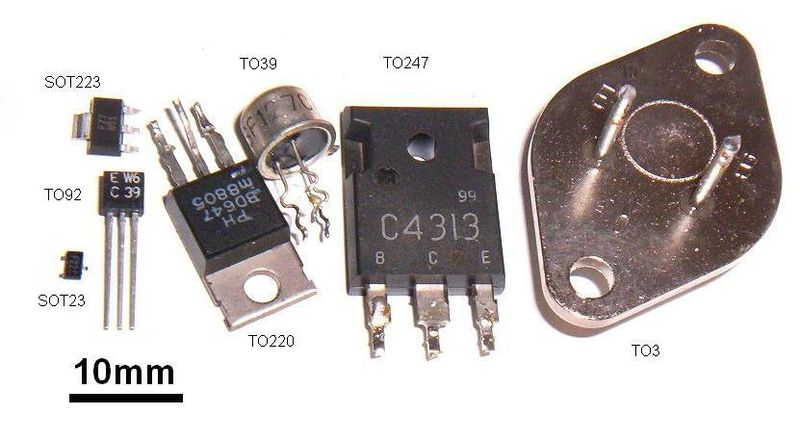
A transistor is a semiconductor device used to amplify or switch electronic signals and electrical power. It acts as a variable valve for electric current and is the fundamental building block of modern electronic devices.
Transistors perform essential functions in electronics:
- Amplification - Increasing signal strength
- Switching - Controlling current flow
- Signal processing - Modulating and shaping signals
- Power control - Managing high-power loads
- Logic operations - Digital circuit implementation
Transistor Types
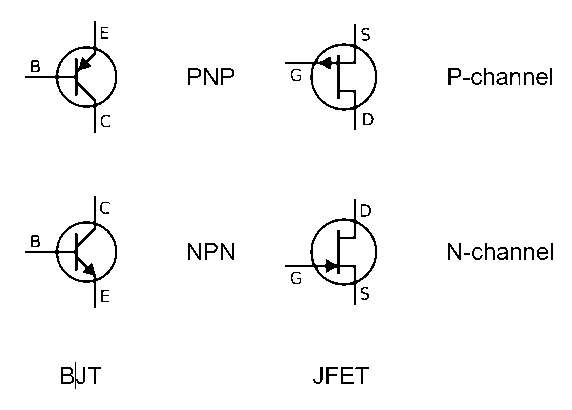
BJT and JFET symbols
Bipolar Junction Transistors (BJTs)
BJTs are current-controlled devices with three terminals: Base, Collector, and Emitter. They come in two polarities:
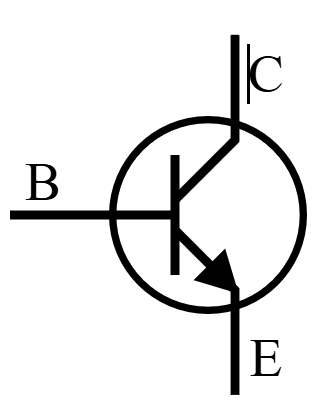
NPN Transistors
- Current flows from Collector to Emitter when Base is positive
- Common configuration for switching and amplification
- Used in digital logic, audio amplifiers, power supplies
PNP Transistors
- Current flows from Emitter to Collector when Base is negative
- Used in complementary circuits with NPN transistors
- Common in H-bridge motor drivers
Field-Effect Transistors (FETs)
FETs are voltage-controlled devices. MOSFETs (Metal-Oxide-Semiconductor FETs) are the most common type:
- Higher input impedance than BJTs
- Lower power consumption
- Used in switching power supplies, motor control
Other Transistor Types
- JFETs (Junction FETs) - Simpler structure, used in analog circuits
- IGBTs (Insulated Gate Bipolar Transistors) - Combine BJT and MOSFET characteristics, used in high-power applications
- Darlington Transistors - Two BJTs in series for high gain
- Phototransistors - Light-sensitive transistors
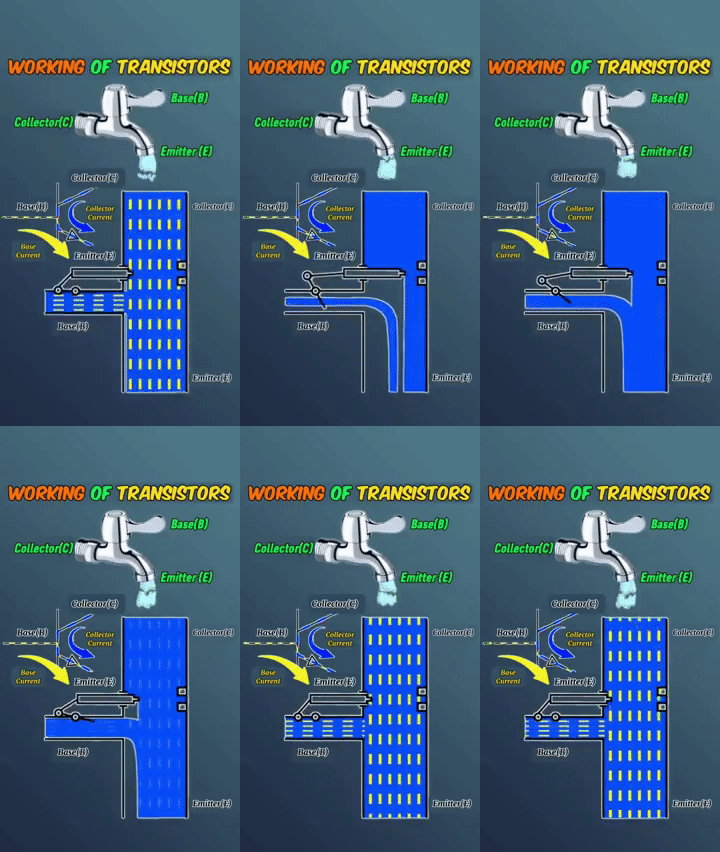
How Transistors Work (BJT)
How Transistors Work (FET)
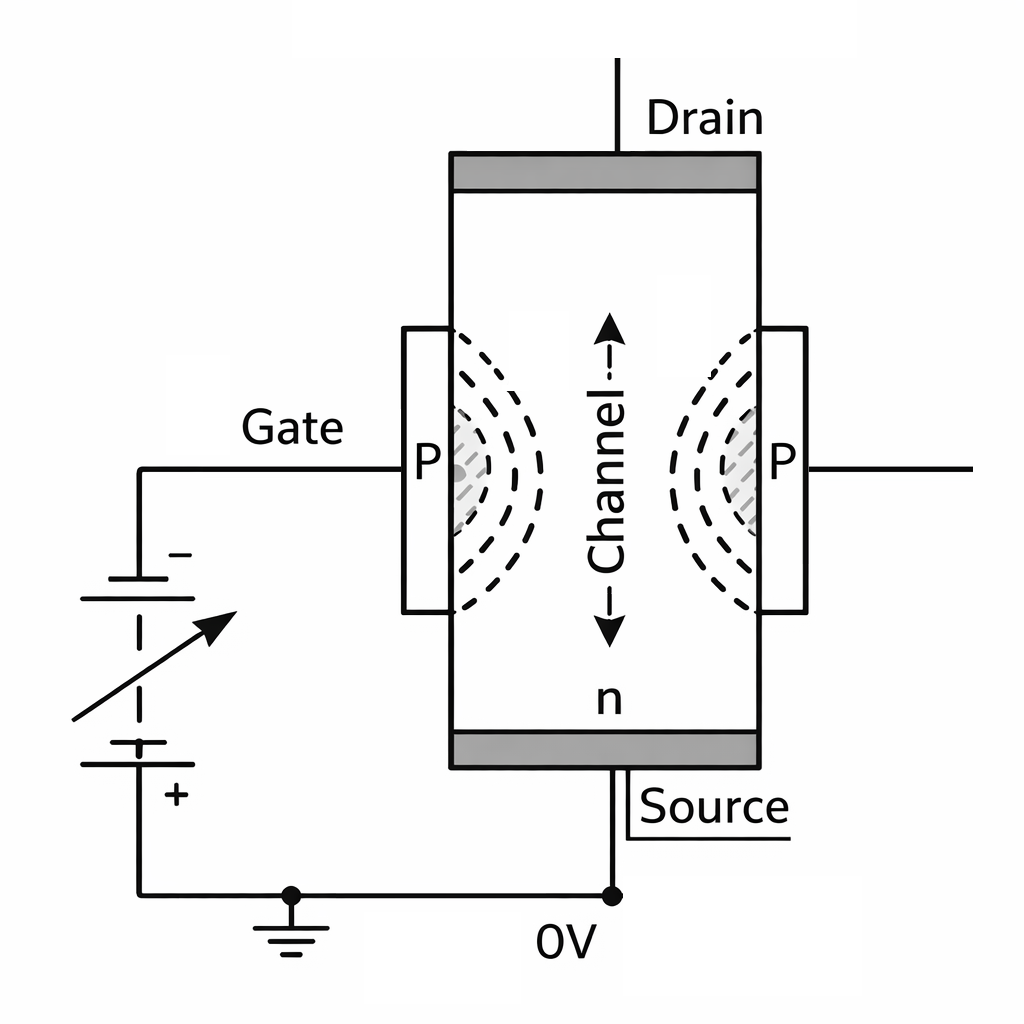
Examples
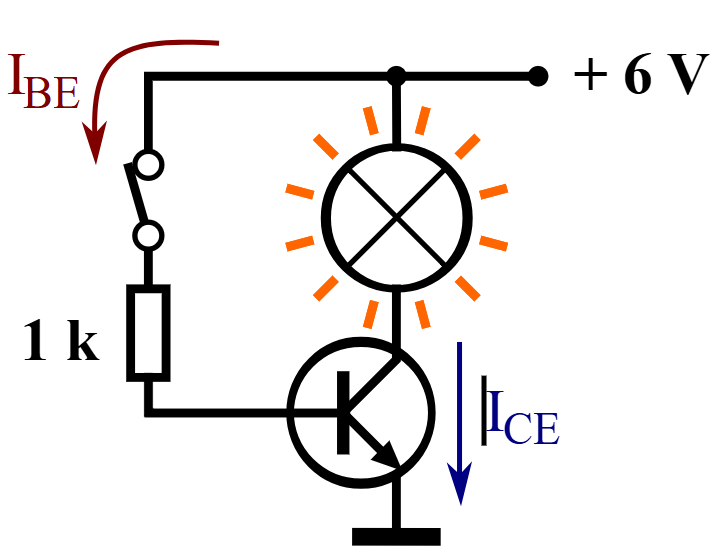
BJT used as an electronic switch in grounded-emitter configuration
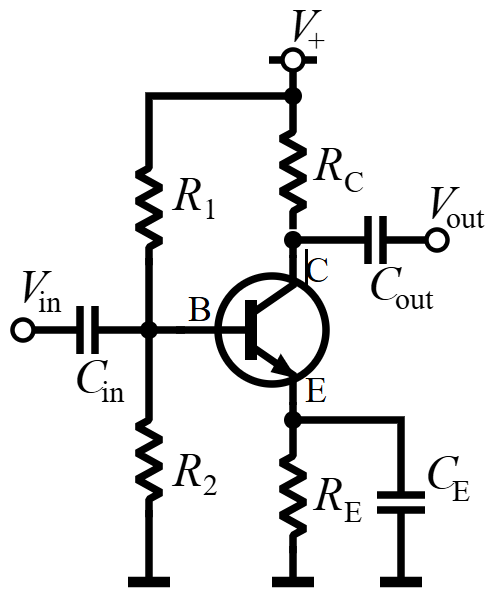
An amplifier circuit, a common-emitter configuration with a voltage-divider bias circuit
Transistor Characteristics
Key Specifications
- Gain (hFE or β) - Current amplification factor
- Maximum voltage - Collector-Emitter voltage rating
- Maximum current - Collector current rating
- Power dissipation - Maximum power the transistor can handle
- Frequency response - How fast the transistor can switch
Transistor Pinout
Transistors have three terminals that must be connected correctly:
For BJTs:
- Base (B) → Control terminal
- Collector (C) → High current terminal
- Emitter (E) → Reference terminal
Identification: When viewing the transistor with the flat side or tab facing you, pins are typically E-B-C from left to right (for TO-92 package).
For MOSFETs:
- Gate (G) → Control terminal
- Drain (D) → High current terminal
- Source (S) → Reference terminal
Assembly Tips
- Verify pinout before soldering
- Use heat sinks for power transistors
- Check for shorts between terminals
- Test functionality with a multimeter
- Ensure proper biasing resistors are used
Next Steps
Ready to assemble? Return to Assembly Guide