Potentiometer - [Learn & Grow]
Understanding Potentiometers
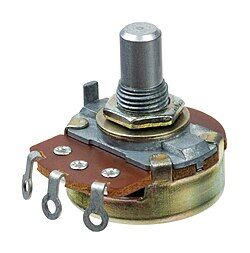
A Potentiometer (often called a pot) is a three-terminal resistor with an adjustable sliding contact (wiper) that forms an adjustable voltage divider. It allows you to vary the resistance in a circuit by turning a knob or sliding a lever.
Potentiometers are variable resistors that provide a means of adjusting electrical resistance manually.
Electronic symbol

(IEC standard)

(ANSI standard)
How Potentiometers Work
A potentiometer consists of:
- Two fixed terminals (ends of the resistive element)
- One wiper terminal (adjustable contact)
As you turn the shaft, the wiper moves along the resistive track, changing the resistance between the wiper and each end terminal.
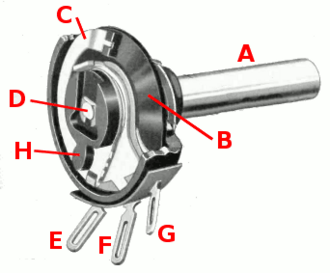
Cutaway drawing of potentiometer showing parts: (A) shaft, (B) stationary carbon composition resistance element, (C) phosphor bronze wiper, (D) shaft attached to wiper, (E, G) terminals connected to ends of resistance element, (F) terminal connected to wiper. A mechanical stop (H) prevents rotation past end points.
Types of Potentiometers
Rotary Potentiometers
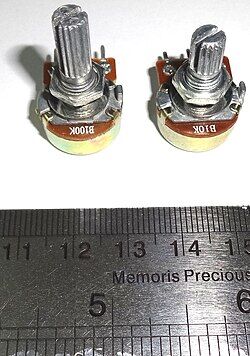
Size scaled 10k and 100k pots that combine traditional mountings and knob shafts with newer and smaller electrical assemblies.
- Most common type
- Knob adjustment
- Single-turn or multi-turn
Linear/Slide Potentiometers
Trimmer Potentiometers
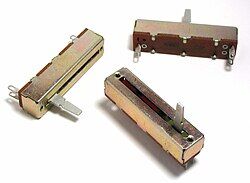
Slide potentiometers (faders)
- Slider adjustment
- Used in audio mixers and lighting controls
Trimmer Potentiometers
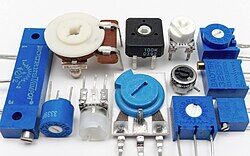
PCB mount trimmer potentiometers, or "trimpots", intended for infrequent adjustment
- Small, preset type
- Used for calibration and fine-tuning
- Often adjusted once and left
How to Read a Potentiometer (Trimmer) Value
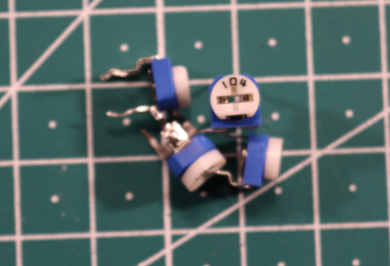
Most trimmer potentiometers use a 3-digit code [ XYZ ] printed on the top.
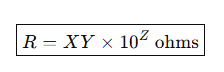
Formula:
Basic Potentiometer Circuit
- X = first digit
- Y = second digit
- Z = multiplier (number of zeros to add)
- R = resistance in ohms (Ω)
Resistance Value Table
| Code | Calculation | Resistance |
|---|---|---|
| 101 | (10 * 10^1) = (10 * 10) = 100 | 100 Ω |
| 102 | (10 * 10^2) = (10 * 100) = 1000 | 1 kΩ |
| 103 | 10 kΩ | |
| 104 | (10 * 10^4) | 100 kΩ |
| 105 | (10 * 10^5) | 1 MΩ |
| 502 | (50 * 10^2) | 5 kΩ |
| 504 | (50 * 10^4) | 500 kΩ |
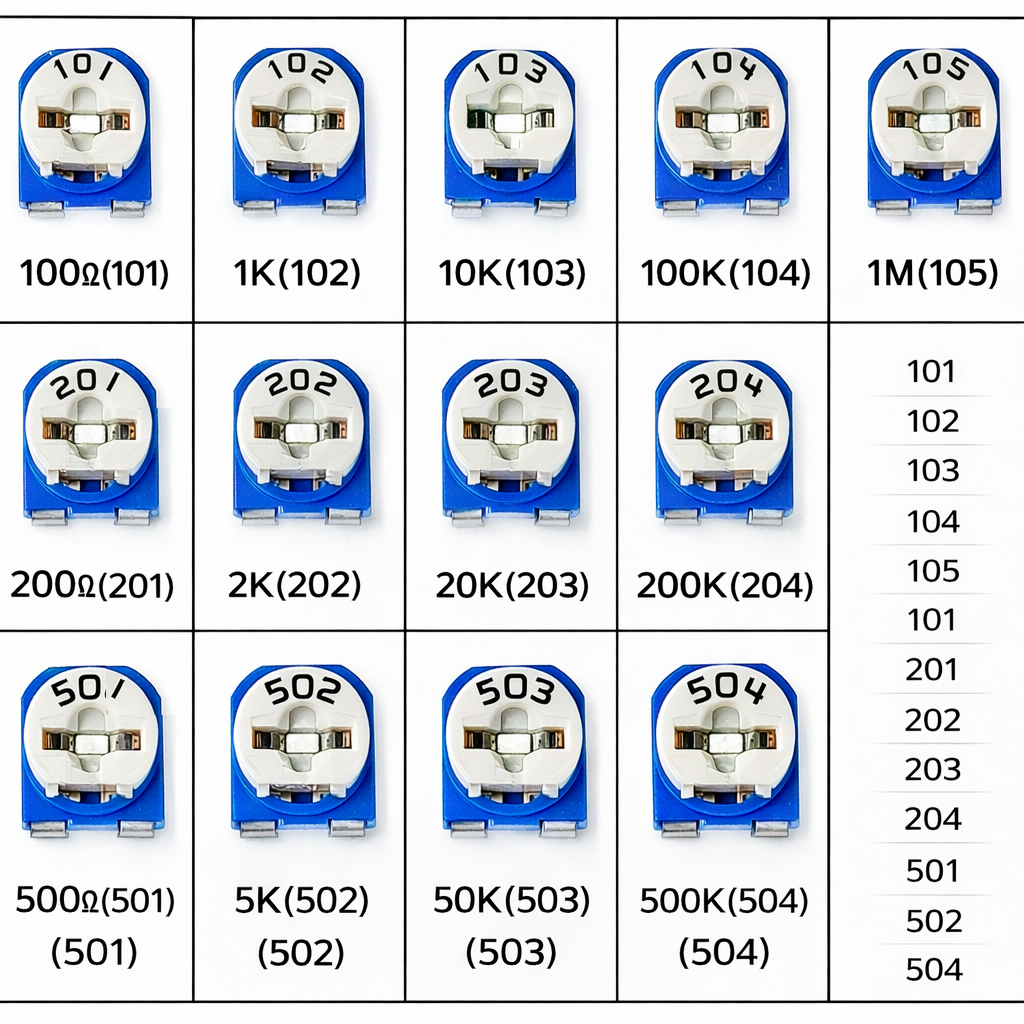
Reading Potentiometer Value
Applications
Potentiometers are used in countless applications:
- Volume controls in audio equipment
- Brightness controls in displays
- Speed controls in motors and fans
- Position sensors
- Calibration adjustments
- Voltage dividers
- Analog input devices