Understanding Ceramic Capacitors
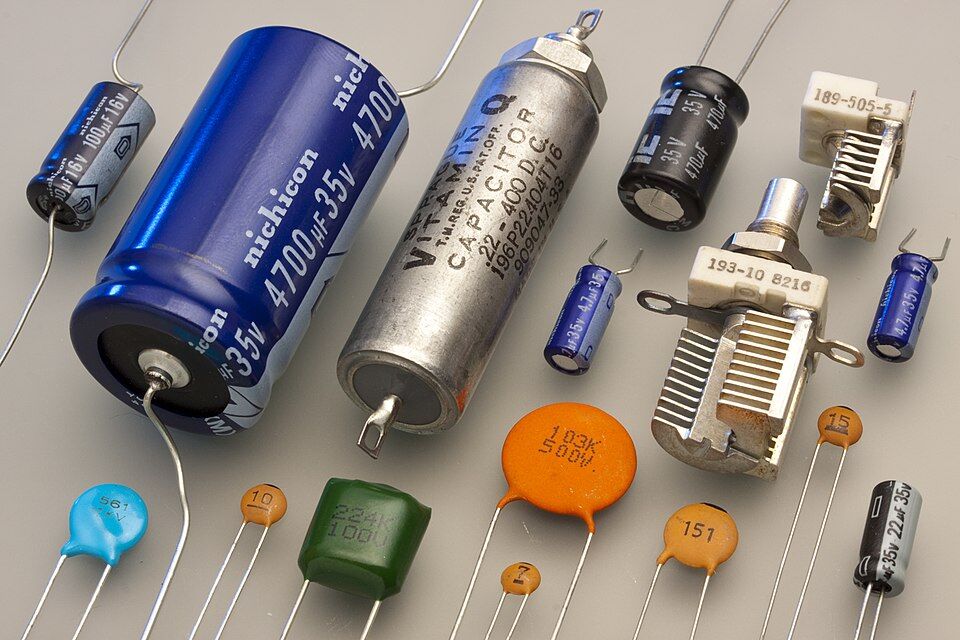
Some different capacitors for electronic equipment
What are Capacitors?
A capacitor is a fundamental electronic component that stores electrical energy in an electric field. It consists of two conductive plates separated by an insulating material called a dielectric. When voltage is applied across the plates, an electric field builds up, storing electrical charge.
Capacitors are essential in modern electronics and serve several important functions:
- Energy Storage - Storing and releasing electrical energy
- Filtering - Removing noise and smoothing voltage signals
- Timing - Creating time delays in RC circuits
- Coupling - Connecting AC signals while blocking DC
- Decoupling - Stabilizing voltage supply to components
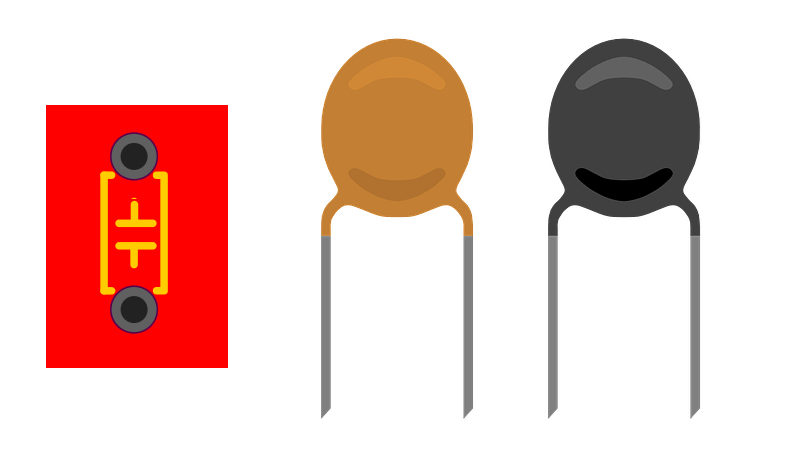
Ceramic Capacitors
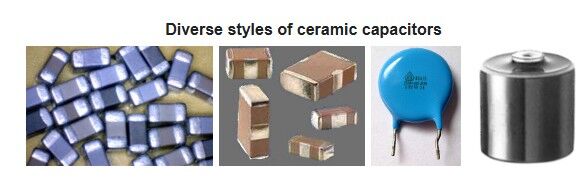
Ceramic capacitors are the most common type of capacitor in modern electronics. They use ceramic material as the dielectric and are known for their excellent properties:
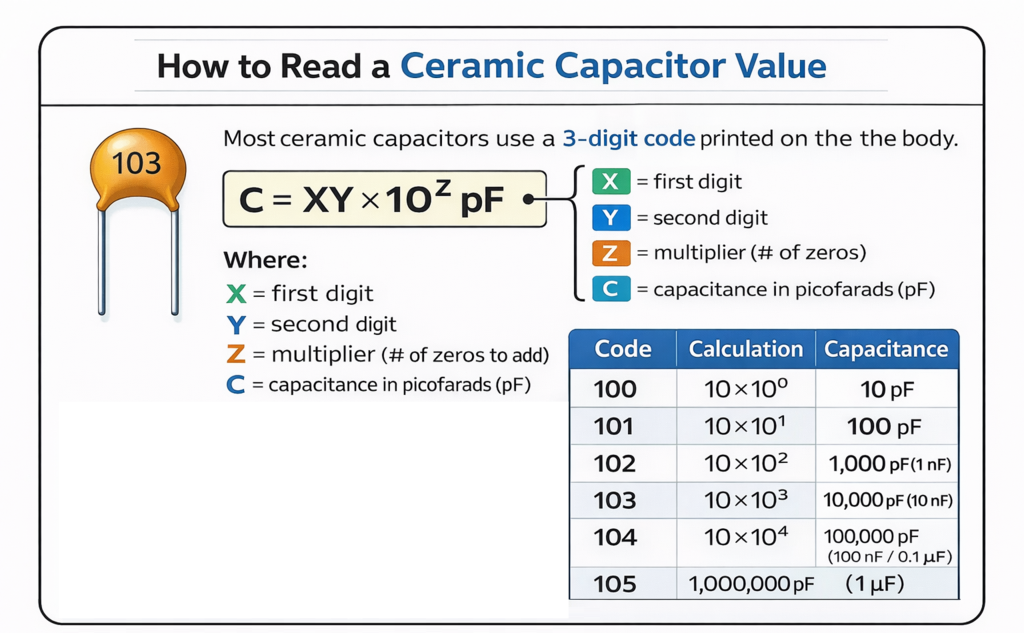
Ceramic Capacitor Codes:
-
Three-digit code: First two digits = capacitance value, third digit = multiplier
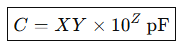
- Example: 104 = 10 × 10⁴ pF = 100,000 pF = 0.1 µF
-
EIA standard codes: For temperature characteristics (X7R, NP0, etc.)
Polarity:
-
Ceramic capacitors: Non-polarized, no polarity markings
Key Characteristics:
- Small size - Compact and space-efficient for dense circuit boards
- Low cost - Economical for mass production
- High reliability - Long service life with minimal failure rates
- Wide capacitance range - From picofarads (pF) to microfarads (µF)
- Non-polarized - Can be connected in either direction
- High voltage ratings - Suitable for various voltage requirements
Ceramic Capacitor Classes
Ceramic capacitors come in different classes based on their temperature coefficient and dielectric material:
Class 1 - High Stability, Low Loss
- NP0/C0G types
- Excellent temperature stability (±30 ppm/°C)
- Low dielectric loss
- Used in precision timing and filtering applications
Class 2 - Higher Capacitance, Moderate Stability
- X7R, X5R types
- Higher capacitance values
- Moderate temperature stability (±15% over -55°C to +125°C)
- Used in decoupling and bypass applications
Class 3 - High Capacitance, Lower Stability
- Y5V, Z5U types
- Very high capacitance values
- Lower temperature stability (±20% over limited range)
- Used where high capacitance is needed but precision is less critical
Other Electronic Capacitor Types
Film Capacitors
- Use plastic film as the dielectric
- Excellent performance for audio and precision applications
- Low distortion and high reliability
- Available in polyester, polypropylene, and polycarbonate types