Power Supply Switch - Learn & Grow
Overview
Power supply switches are fundamental components in electronic circuits, serving as the primary control mechanism for electrical power flow. They provide users with a simple and reliable way to turn devices on and off, making them essential in virtually every electronic system from simple toys to complex industrial machinery.
Types of Power Supply Switches
- Toggle Switches
- Push-Button Switches
- Slide Switches
- Rotary Switches
- Rocker Switches
Switch Configurations
Poles and Throws
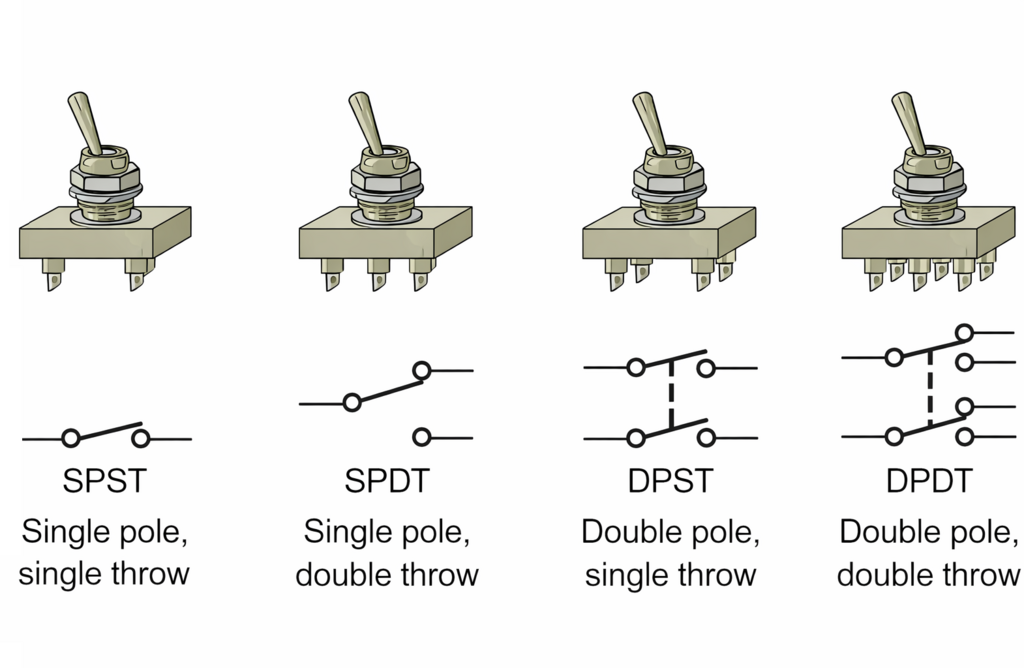
Switch configurations are described by poles (circuits) and throws (positions):
- SPST (Single Pole, Single Throw): Simple on/off switch
- SPDT (Single Pole, Double Throw): Selects between two circuits
- DPST (Double Pole, Single Throw): Controls two circuits simultaneously
- DPDT (Double Pole, Double Throw): Complex switching configurations
Poles and Throws - Center Stop
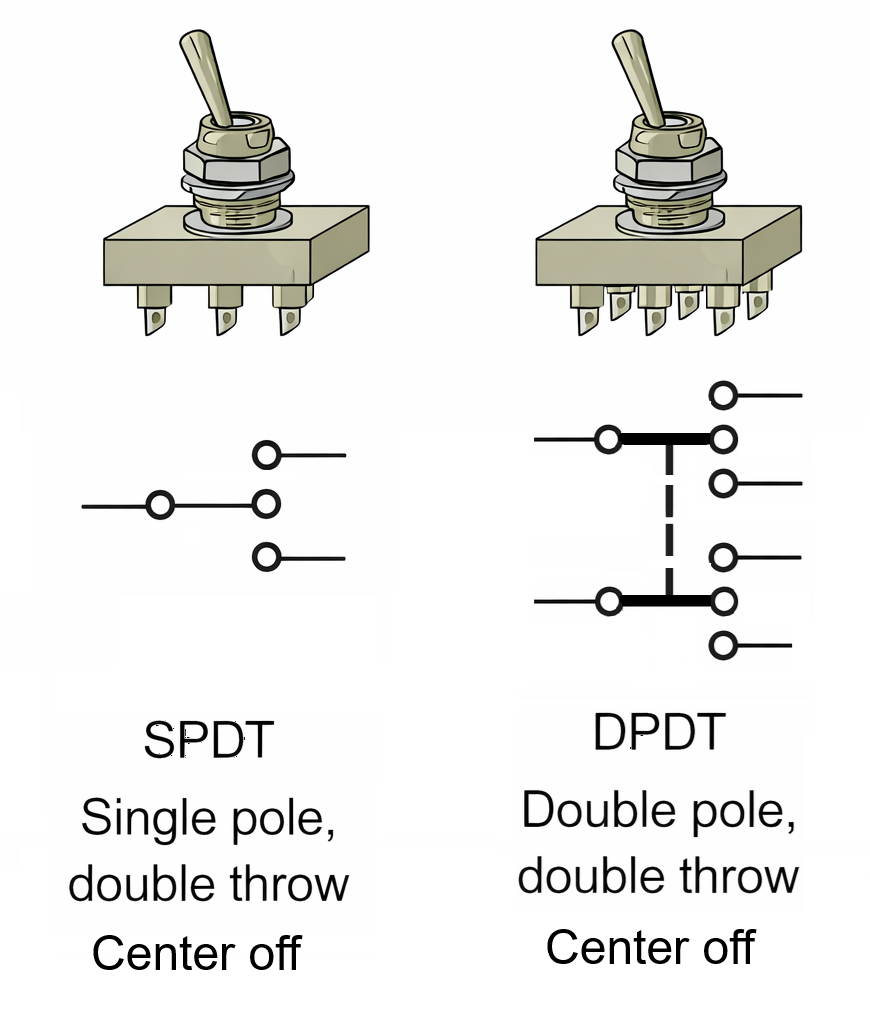
Contact Arrangements
- Normally Open (NO): Circuit open when switch is unactuated
- Normally Closed (NC): Circuit closed when switch is unactuated
- Changeover: Switches between two contact sets
Advanced Switching Technologies
Solid-State Switches
Semiconductor-based switches that use transistors, thyristors, or relays:
- MOSFET Switches: Fast switching, low resistance
- Triac Switches: AC power control
- Reed Relays: Hermetically sealed magnetic switches