Navigation Light - Learn & Grow
Overview
Navigation lights are essential signaling devices used in aviation, maritime, and space industries to indicate the position, direction, and status of vehicles. They help prevent collisions and ensure safe navigation by providing visual cues about orientation and movement.
Description
Navigation lights originate from maritime traditions where ships use colored lights to signal their position. The aerospace and space industries have adopted similar conventions:
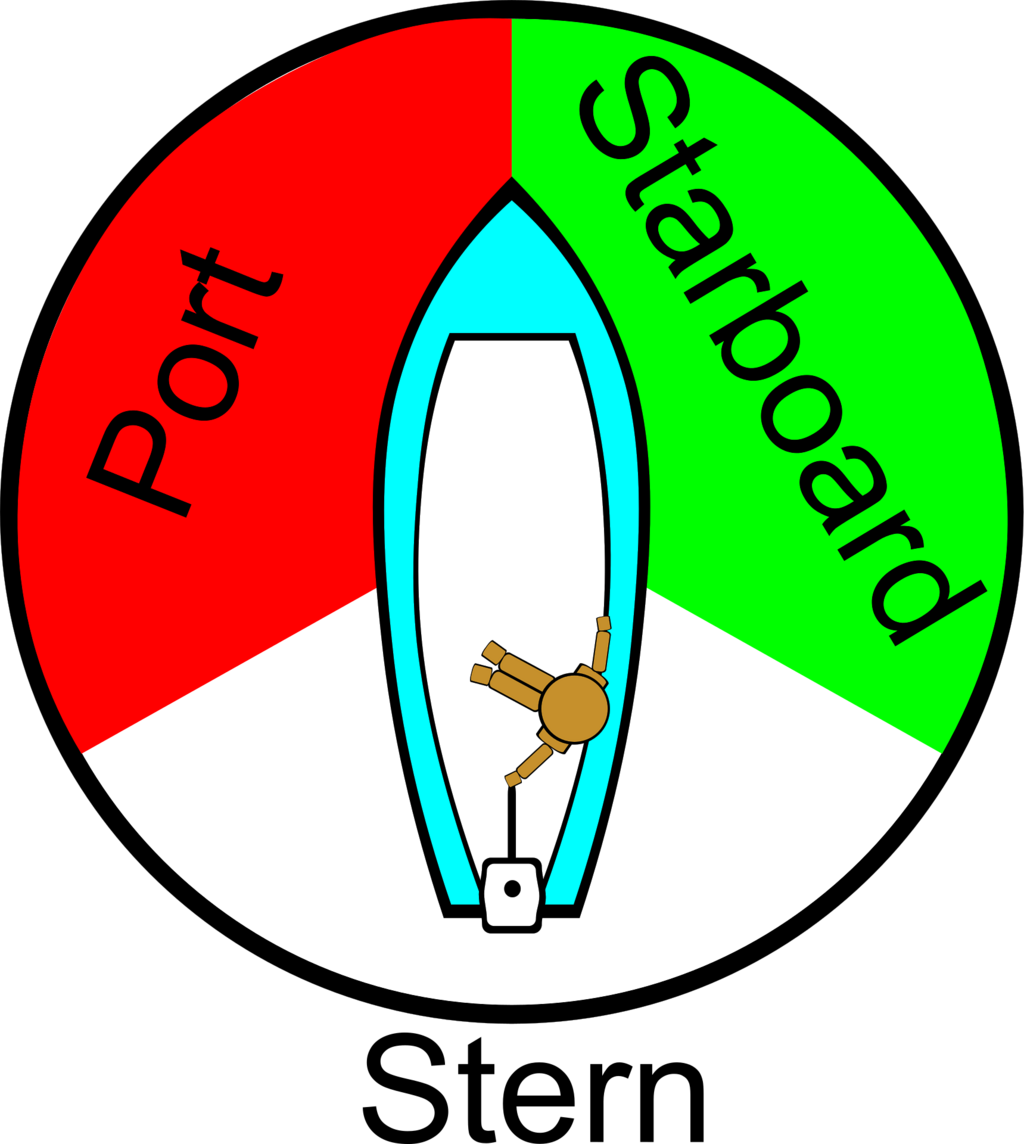
- Port side: Red light
- Starboard side: Green light
- Stern (aft): White light
- Anti-collision strobe lights: White flashing lights
- Logo light: Illuminates branding or identification
Historical Context
Where do navigation lights come from? The aerospace and space industries have borrowed many concepts from the shipping industry. For example, ships have a port side and use specific colored lights to indicate position. Similarly, aircraft and spacecraft adopted comparable navigation light conventions.
Historically, ships also used celestial navigation, relying on stars to determine their position at sea before modern GPS systems.
In addition, early aircraft and spacecraft navigation often relied on celestial or "star" navigation. Some older airliners and spacecraft had dedicated ports in the cockpit or control cabin ceiling for this purpose.
The two main Boeing airliners that featured a dedicated port for celestial navigation (star navigation) were:
This “porthole” in the cockpit ceiling was specifically called a sextant port.
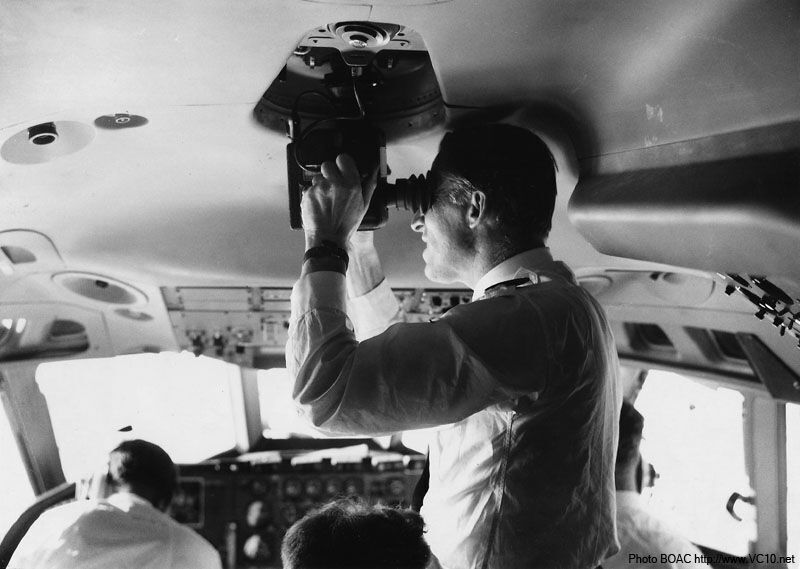
Role of the Navigator: Early Boeing 707s required a four-person cockpit crew: Pilot, Co-pilot, Flight Engineer, and Navigator. The navigator was necessary for transoceanic flights to determine position, often using a sextant for celestial navigation.
- Boeing 707
- Early models of the Boeing 747
Configurations
Basic Lighting Setup
- Facing towards observer: Shows appropriate side lights
- Facing away from observer: Shows stern white light
Aircraft Navigation Lights
- Aft light (white)
- Anti-collision strobe lights (white, flashing)
- Logo light (various colors)
Applications
- Aviation: Position indication on aircraft
- Spacecraft: Orientation signaling for Dragon capsules and other vehicles
- Maritime: Vessel navigation and collision avoidance
Images
Navigation Light Configurations
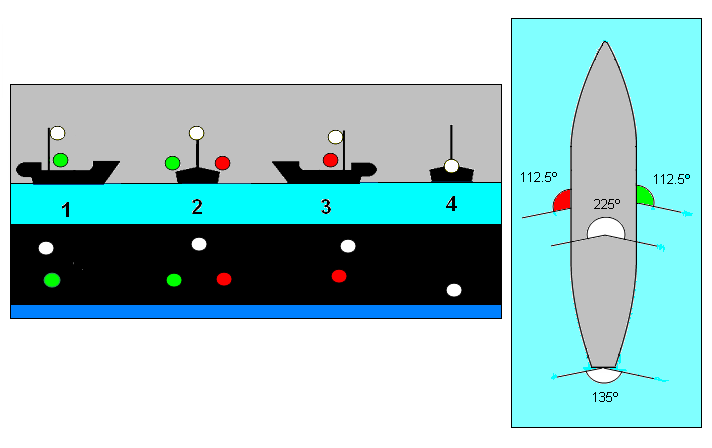
Basic lighting configuration.
2, a vessel facing directly towards observer;
4, vessel facing away from the observer
Basic lighting configuration showing port (red) and starboard (green) lights
Aircraft Navigation Lights
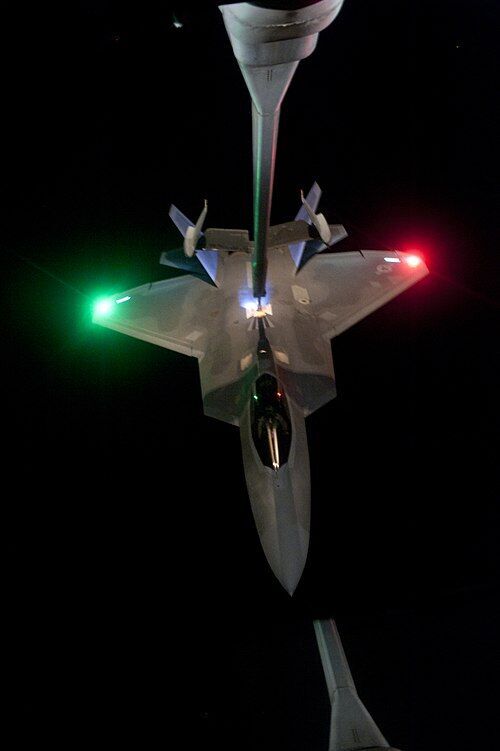
Navigation lights on an F-22 Raptor showing red and green positioning lights
Aircraft Navigation Lights
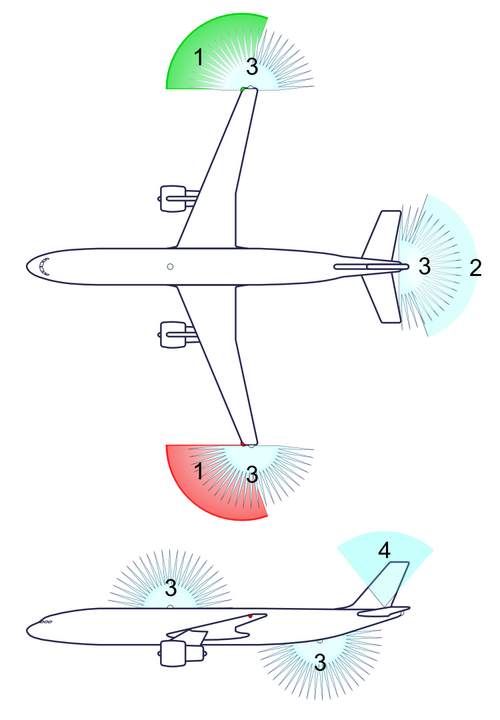
1. Navigation lights
2. Aft light
3. Anti-collision strobe lights
4. Logo light
Spacecraft Navigation Lights
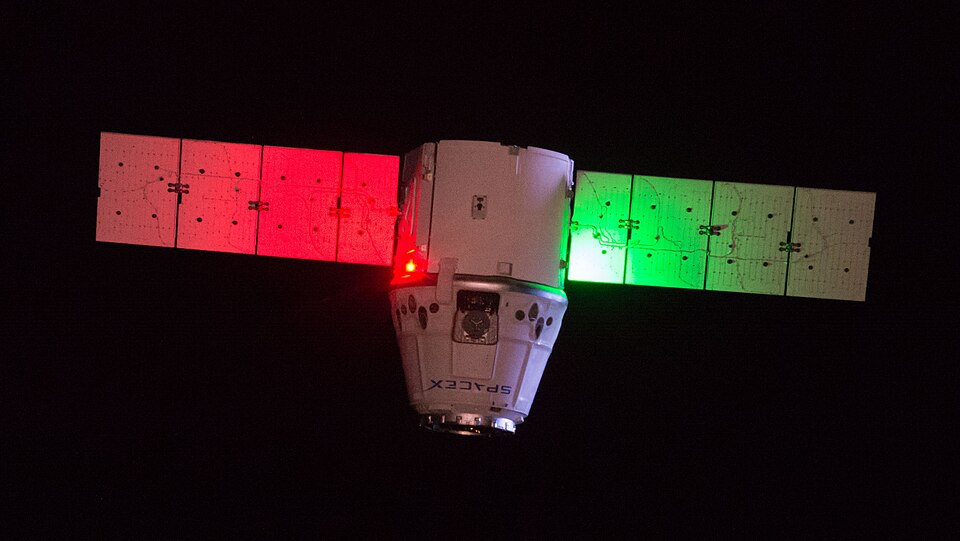
Red and green bottom navigation lights on SpaceX Dragon spacecraft