Magnetic Switch - Learn & Grow
Reed Magnetic Switch
Description
Reed magnetic switches are very common components in industry. They are used in applications ranging from home alarm systems to industrial detection sensors. A switch activated by magnetic fields, used for proximity sensing.
The core of a reed switch consists of two ferromagnetic reeds (thin metal strips) that are sealed inside a glass tube filled with inert gas. When a magnetic field is applied, the reeds become magnetized and attract each other, closing the electrical circuit. Reed switches are hermetically sealed, making them highly reliable and resistant to environmental factors.
Reed switches are available in different types, such as normally open (NO) and normally closed (NC). They are offered both as discrete components and in various packaging types to suit different applications and trends.
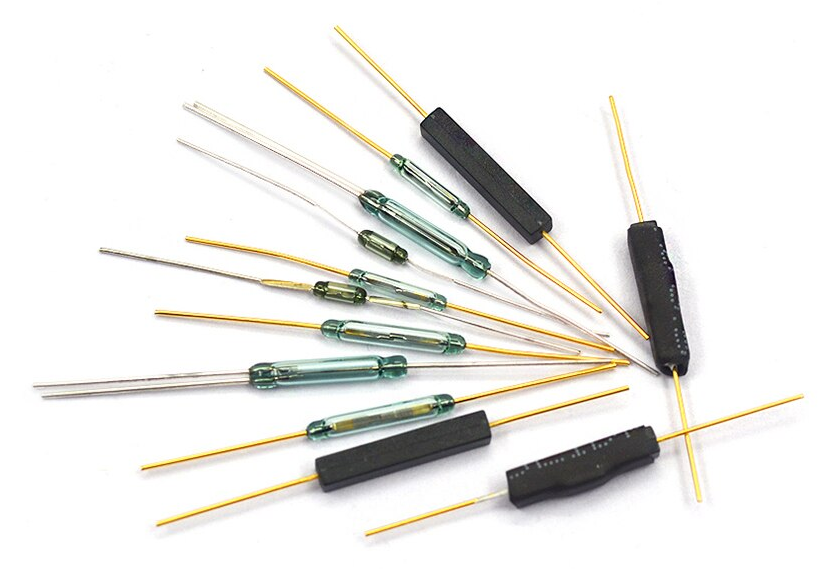 | 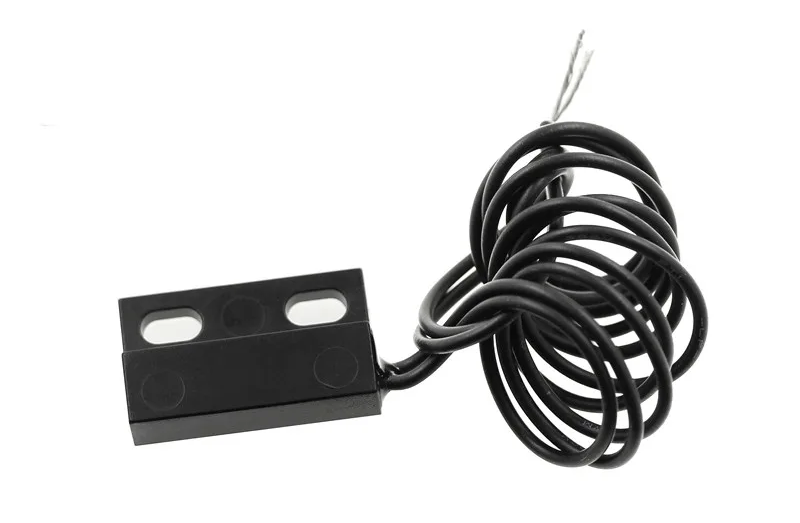 |
| Different varieties of Reed switches MKA14103 GPS-14B GPS-14A Normally Open/ N/C Normally closed | Packaged Reed switch |
|---|
Types of Reed Switches
Normally Open (NO)
In a normally open reed switch, the contacts are open when no magnetic field is present. When a magnet approaches, the contacts close, allowing current to flow. This type is commonly used for door sensors and proximity detection.
Normally Closed (NC)
Normally closed reed switches have contacts that are closed by default. The presence of a magnetic field opens the contacts, interrupting the current flow. These are used in security systems where the switch remains closed until triggered.
Changeover (NC & NO)
Changeover reed switches have three terminals: common (COM), normally closed (NC), and normally open (NO). Without a magnetic field, COM is connected to NC. With a magnetic field, COM switches to NO. This type provides both open and closed states for more complex circuitry.
NO (Normally Open) | 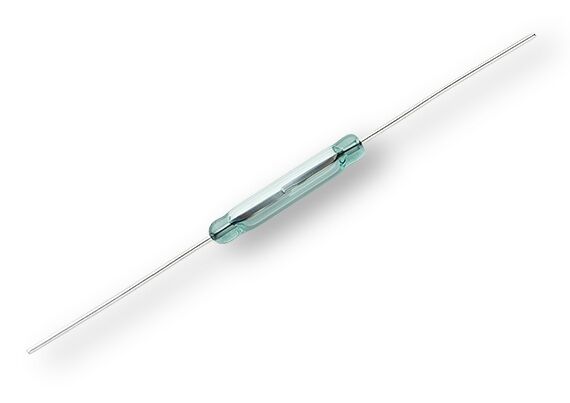 | 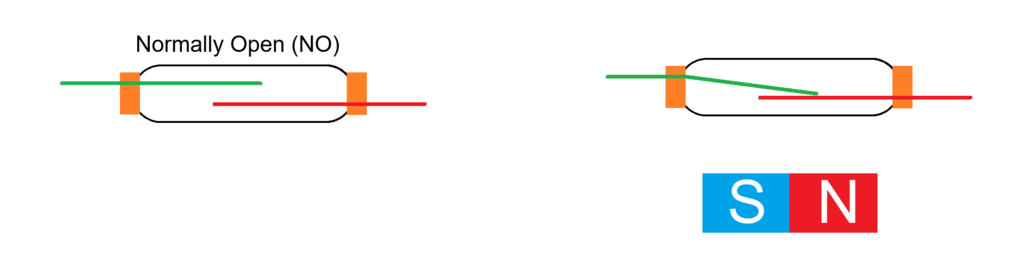 |
NC (Normally Closed) | | 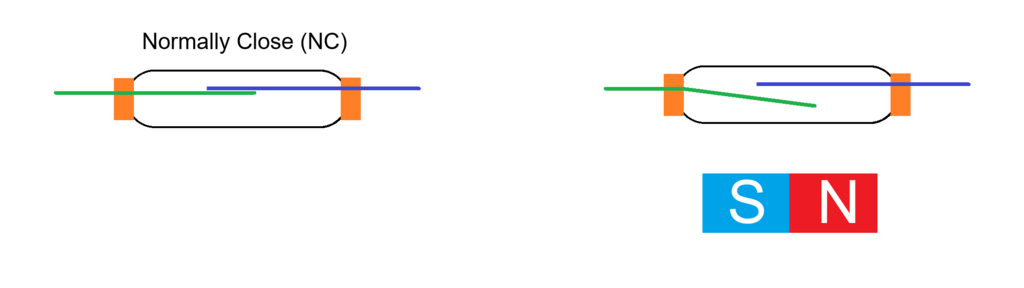 |
Changeover (NC & NO) | 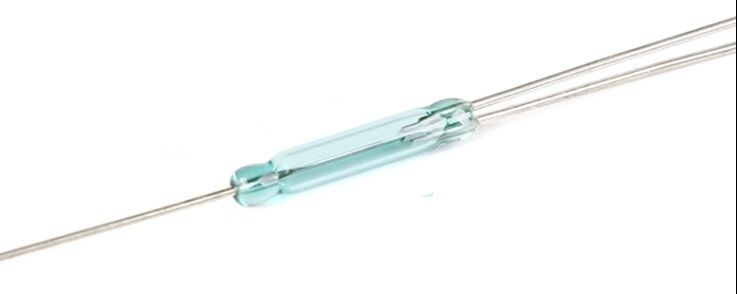 | 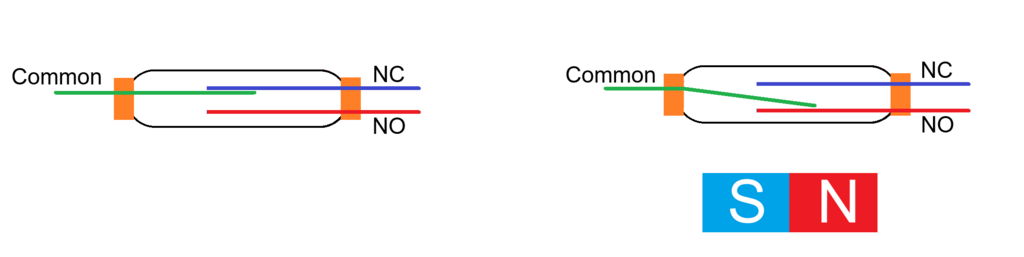 |
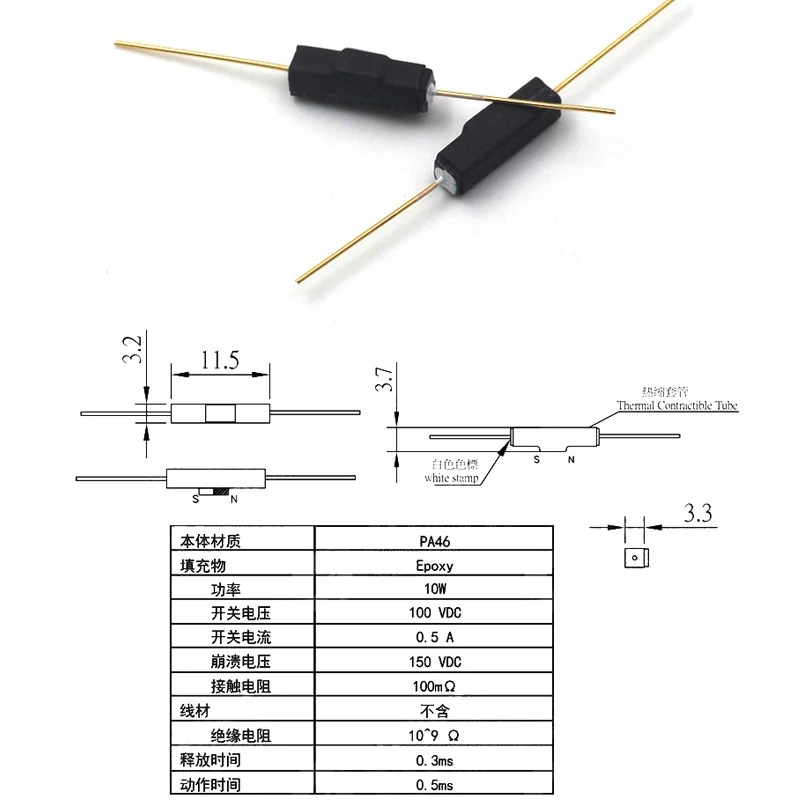 |
| GPS-14A - Magnetic induction switch |
|---|
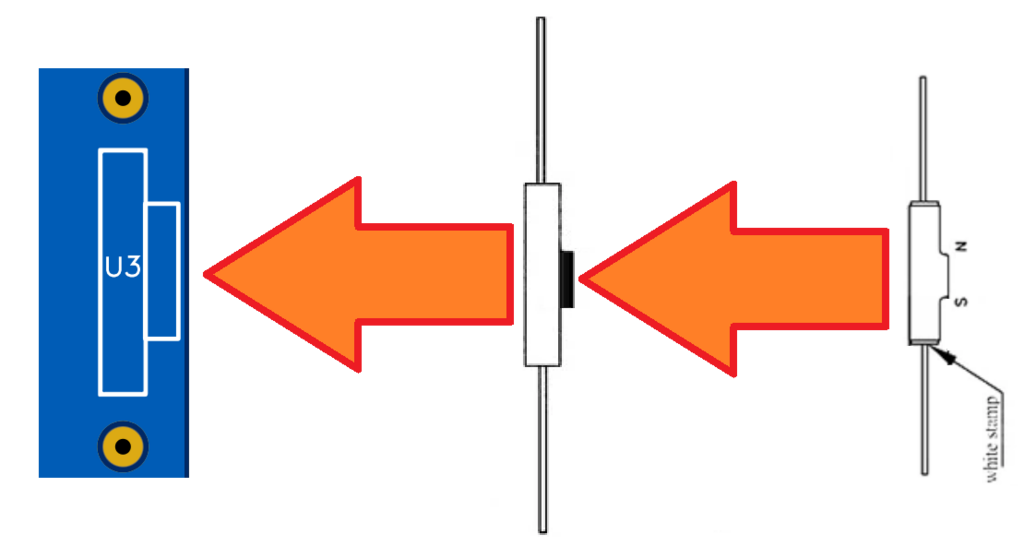 |
| Component Placement Location |
|---|
Usage
Detect magnetic fields in security systems or position sensors.
Images
Notes
Avoid strong magnets to prevent damage.