DC Motor - Learn & Grow
Overview
DC motors are fundamental electromechanical devices that convert electrical energy into mechanical motion. They are ubiquitous in modern technology, powering everything from small toys to large industrial machinery. Understanding DC motors is essential for anyone working with electronics, robotics, or automation projects.
Basic Principles
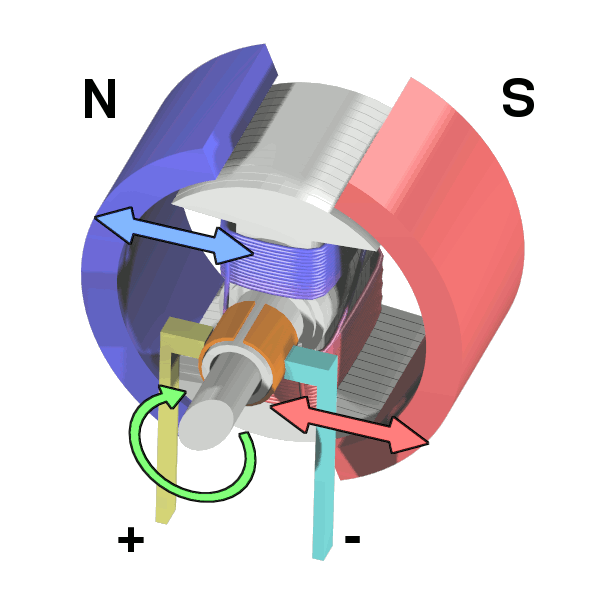
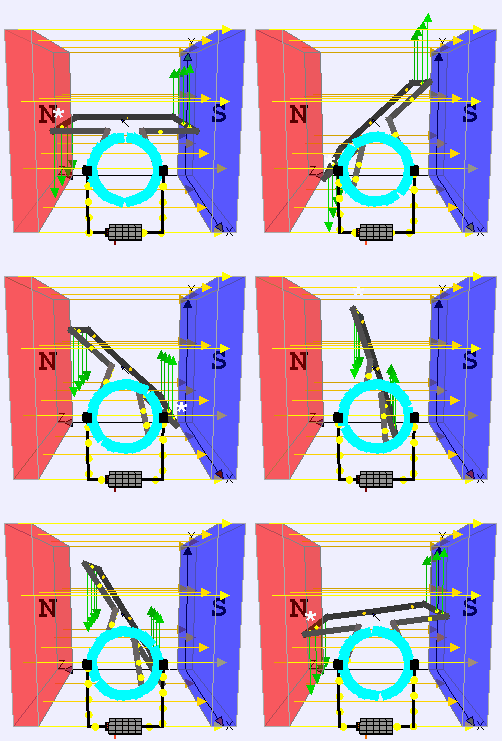
DC motors operate on the principle of electromagnetic induction. When electric current flows through a coil within a magnetic field, it experiences a force that causes rotation. The key components include:
- Stator: The stationary part containing permanent magnets or electromagnets
- Rotor (Armature): The rotating part with wire windings
- Commutator: A mechanical switch that reverses current direction
- Brushes: Conductive contacts that transfer current to the commutator
Types of DC Motors
Permanent Magnet DC Motors
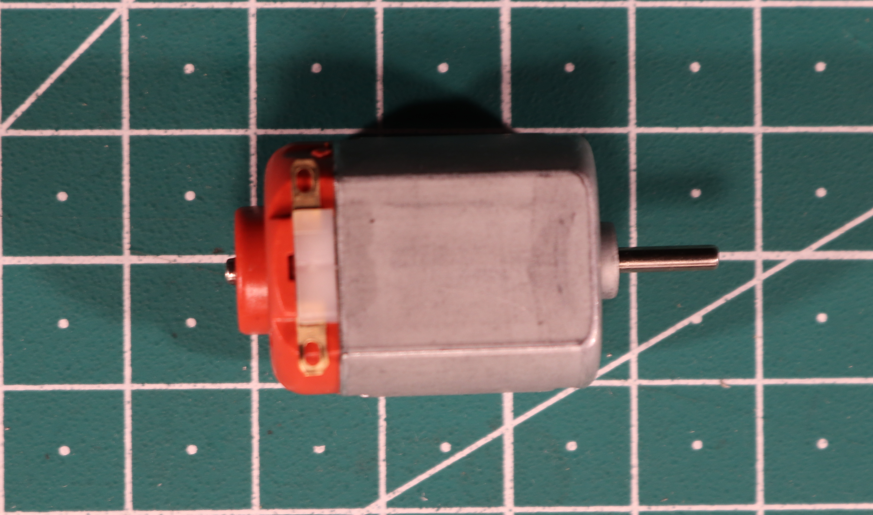
These are the most common type, using permanent magnets in the stator. They are simple, reliable, and cost-effective, making them ideal for most hobby and educational projects.
Geared DC Motors
Geared motors incorporate a gearbox that reduces speed while increasing torque. Common gear types include:
- Spur Gears: Simple and efficient, but can be noisy
- Planetary Gears: Compact and efficient, used in precision applications
- Worm Gears: Provide high torque reduction with self-locking capability
Brushless DC Motors (BLDC)
BLDC motors use electronic commutation instead of mechanical brushes, offering higher efficiency, longer lifespan, and better speed control. They require specialized controllers but are increasingly common in modern applications.
Performance Characteristics
DC motor performance is characterized by several key parameters that vary with operating conditions:
- Speed-Torque Curve: Shows how motor speed decreases as load increases
- Efficiency: Typically peaks at around 70-80% of full load
- Starting Torque: Initial torque available when the motor starts
- Stall Torque: Maximum torque before the motor stops rotating
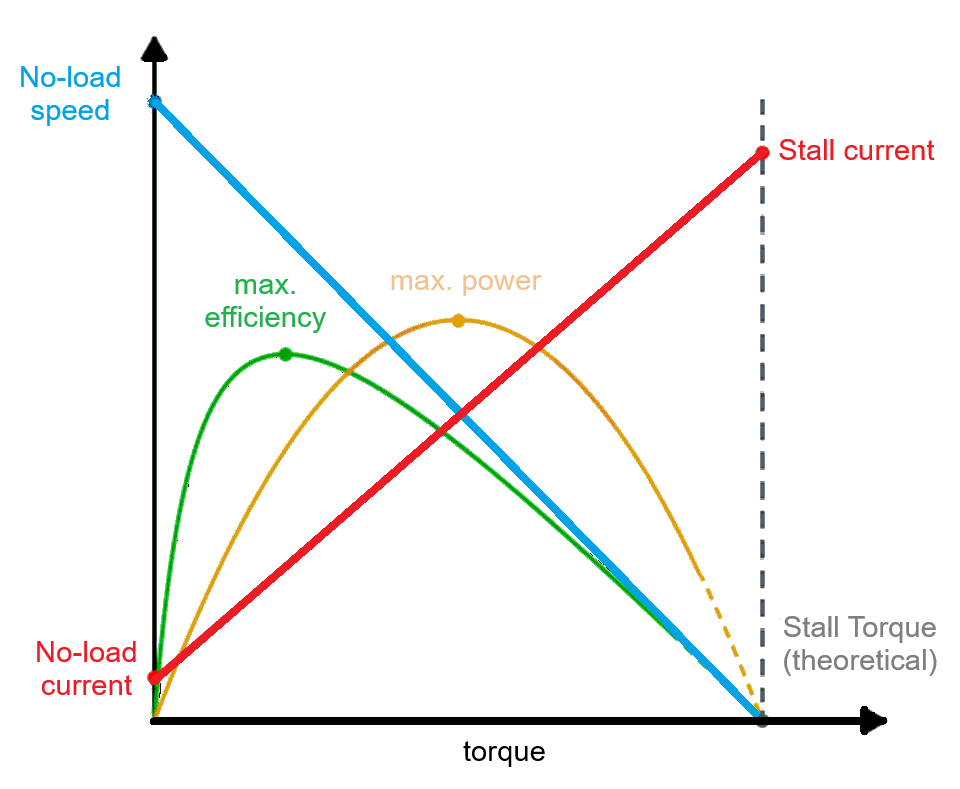
Example DC motor performance characteristics. Click to view detailed specifications.
Voltage and Performance Ratings
DC motors are available in various voltage ratings, from 1.5V for small toys to 48V or higher for industrial applications. Key considerations:
- Operating Voltage: The recommended voltage range for optimal performance
- Current Draw: Varies significantly between no-load and stall conditions
- Power Rating: Maximum power the motor can handle continuously
- Temperature Rating: Maximum operating temperature to avoid damage
Motor Control and Drivers
Basic Control Methods
- Direct Voltage Control: Simple but limited speed control
- PWM (Pulse Width Modulation): Variable speed control by varying duty cycle
- H-Bridge Circuits: Bidirectional control and braking
Motor Driver ICs
Integrated circuits designed specifically for motor control:
- L298N: Dual H-bridge, can drive two DC motors
- TB6612FNG: Efficient, low-voltage driver for small motors
- DRV8833: Low-power, high-efficiency driver
Capacitor Usage in DC Motor Circuits
Adding a ceramic capacitor across DC motor terminals is a best practice, even for simple circuits. While toy motors may work without one, capacitors provide important benefits:
Why Use a Capacitor?
- Noise Suppression: Reduces electromagnetic interference from brush sparking
- Voltage Stabilization: Smooths out voltage fluctuations and spikes
- Component Protection: Safeguards microcontrollers and sensors from electrical noise
- Improved Reliability: Prevents erratic behavior in complex circuits
Capacitor Selection
For most small DC motors (3-12V):
- Type: Ceramic capacitor (0.1μF to 1μF)
- Voltage Rating: At least 25V, preferably 50V
- Placement: Directly across motor terminals
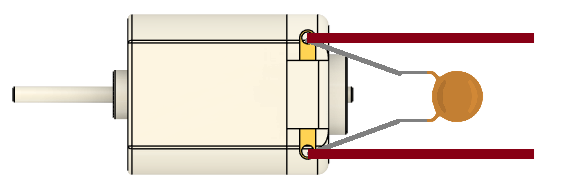
Proper capacitor placement across DC motor terminals.
Applications and Uses
DC motors find applications in countless devices and systems:
- Consumer Electronics: CD/DVD players, fans, printers
- Automotive: Power windows, windshield wipers, seat adjustment
- Industrial: Conveyor systems, pumps, robotic arms
- Hobby and Education: Model vehicles, robots, automated projects
- Medical Equipment: Surgical tools, infusion pumps
Maintenance and Troubleshooting
Common Issues
- Low Speed: Check voltage, load, or internal resistance
- Excessive Noise: Worn brushes, poor bearings, or loose components
- Overheating: Overloaded motor or insufficient cooling
- Intermittent Operation: Faulty connections or damaged commutator
Maintenance Tips
- Keep motors clean and free of debris
- Lubricate bearings periodically (if accessible)
- Replace worn brushes when performance degrades
- Store motors in a dry environment
Safety Considerations
- Never connect motors directly to power sources without appropriate drivers
- Use fuses to protect against short circuits
- Avoid operating motors beyond their rated specifications
- Secure moving parts to prevent injury
- Be aware of pinch points and rotating components
Advanced Topics
Back-EMF and Speed Control
When a DC motor rotates, it generates a voltage (back-EMF) that opposes the applied voltage. This principle is used in speed control systems and can be measured to determine motor speed.
Efficiency Optimization
Motor efficiency can be optimized by:
- Operating at the motor's peak efficiency point
- Using appropriate gear ratios
- Minimizing friction losses
- Choosing motors with high-quality bearings and brushes